| - | - | - |
|---|---|---|
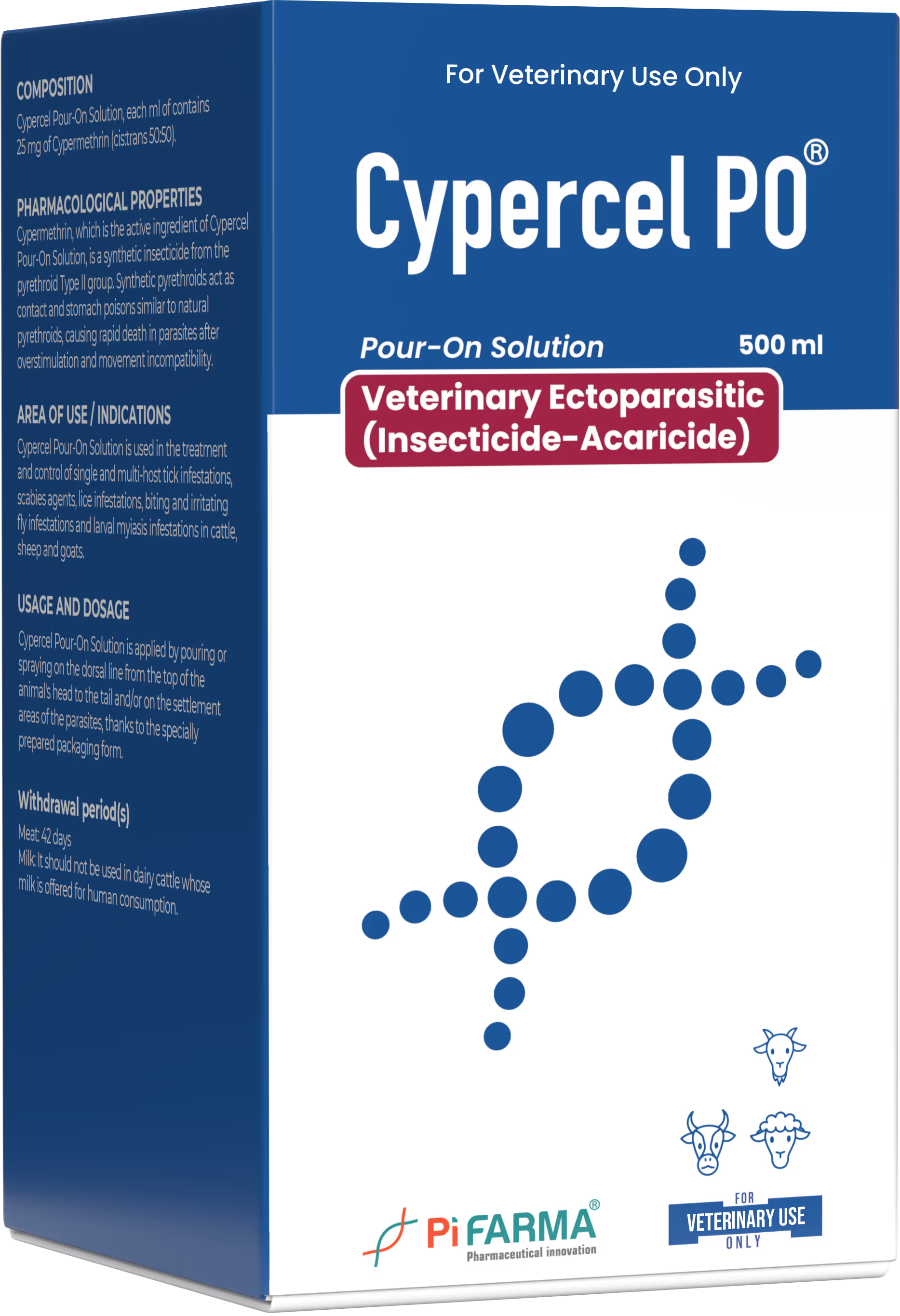
| Product Group | : | Parasiticides |
| Pharmaceutical Form | : | Pour-On Solution |
| Active Ingredient | : | Cypermethrin |
| Target Species | : | Cattle, Sheep, Goat |
| Package Form | : | 500 ml |
For Veterinary Use Only
For Veterinary Use Only
Pour-On Solution
Veterinary Ectoparasitic (Insecticide-Acaricide)
COMPOSITION
It is blue colored with a light aromatic scent containing 25 mg cypermethrin (cis:trans 50:50) per ml.
PHARMACOLOGICAL PROPERTIES
Pharmacodynamic Properties
The active ingredient, Cypermethrin: is a synthetic insecticide belonging to the pyrethroid Type II group. Synthetic pyrethroids act as contact and stomach poisons, similar to natural pyrethroids, causing excessive stimulation and movement disorders in parasites, leading to their rapid death. They do not produce a systemic effect. Insecticides in the pyrethroid group are lipophilic. Thus, they easily pass through the cuticle of parasitic insects, which is rich in lipoid molecules, and reach their target sites. Ectoparasites ingest cypermethrin orally or through contact. Cypermethrin exerts its neurotoxic effect on the parasite cell by causing excessive sodium influx into the nerve cell through either prolonged opening or slow closure of sodium channels in the nerve cell membrane. This causes repeated discharge and sudden depolarization in the parasite's nerve cell membrane, resulting in convulsions, restlessness, and subsequently, coordination disorders and paralysis in the parasite. Cypermethrin is particularly effective in sensory nerves, nerve secretion cells, and nerve endings. Death occurs as a result of sufficient Cypermethrin activity.
Pharmacokinetics Properties
When applied to the skin, cypermethrin penetrates and spreads through the skin. As it is a lipophilic substance, it accumulates most in adipose tissue, the liver and the kidneys. It has been determined that cypermethrin applied through the skin is absorbed at very low levels, with only 2% of a single dose excreted in urine and 0.5% in feces within 2-6 days.
Toxicity: Classified as a Class II substance according to the World Health Organization (WHO) classification, the acute toxicity of Cypermethrin is variable and depends on factors such as the cis:trans ratio of the drug, the species, age, and sex of the animal, and the solvent in the formulation. The cis isomer is more toxic than the trans isomer. The acute oral LD50 value of cis:trans 90:10 cypermethrin is 367 mg/kg body weight in female rats, while the same value for cis:trans 40:60 is 891 mg/kg body weight. The acute LD50 value in rats has been determined to be between 400-4000 mg/kg body weight.
AREA OF USE / INDICATIONS
It is used for the treatment of and control of single and multiple tick infestations, mange agents, lice infestations, biting and irritating fly infestations, and fly infestations causing larval myiasis in cattle, sheep, and goats.
USAGE AND DOSAGE
Thanks to its specially designed packaging, it is applied by pouring or spraying along the dorsal line from the top of the animal's head to the tail and/or on areas where parasites are likely to settle. The pharmacological dose of cypermethrin applied to domestic ruminants by pouring on the back is maintained between 2-2.5 mg/kg body weight.
Practical Dose Table:
Cattle:
Body weight Cypercel PO
100 kg body weight 10 ml
100-200 kg body weight 20 ml
More than 300 kg body weight 30 ml
Sheep and goat:
Considering the inevitable loss of medication due to the longer wool of sheep and goats, a dose of 5 mg cypermethrin/kg body weight is used.
Body weight Cypercel PO
5 kg body weight 1 ml
25 kg body weight 5 ml
50 kg body weight 10 ml
For all animal species, applying the required amount of medication along the spine is sufficient for fly and lice control. When treating for ticks, medication must also be applied to areas where ticks are commonly found, such as the armpits, groin area, around the hooves, udders, and ear bases. When treating mange in cattle, sheep, and goats, the recommended single dose of medication is doubled for each species. A single application of the medication protects animals against reinfestation for 2-6 weeks, depending on the host, parasite, and seasonal conditions. Cypercel PO is a ready-to-use medication and does not require dilution.
SPECIAL CLINICAL INFORMATION AND SPECIAL WARNINGS FOR TARGET SPECIES
This product is applied only to the back and infested areas of cattle, sheep, and goats to treat external parasite infestations. Recommended treatment doses should not be exceeded. Otherwise, poisoning may occur. Avoid application in excessively hot weather. Do not apply to the eyes, mouth, or severely lesion-affected skin areas of animals. The duration of protective effect may vary depending on external factors such as ambient temperature and the animal's parasite load. It should not be used on animals younger than 4 weeks of age unless absolutely necessary.
Use during pregnancy and lactation
The safe use of this product during pregnancy has not been established. It should only be administered based on the veterinarian's benefit/risk assessment.
ADVERSE EFFECTS
When administered at the recommended therapeutic doses for target species, it does not cause any undesirable effects or side effects. In rare cases, mild signs of restlessness may be observed in some animals within 2 days of administration. These effects are short-lived and transient.
DRUG INTERACTIONS
When used in vivo in combination with organophosphate insecticides, cypermethrin and other pyrethroids exhibit increased inhibitory effects on the liver microsomal enzyme system and neurotoxic effects. Their immunosuppressive effects become more pronounced.
Should not be used in combination with other medicinal products.
SYMPTOMS OF OVERDOSE, PRECAUTIONS AND ANTIDOTE
When used at very high doses and repeatedly over a long period of time in target animals, it can cause acute poisoning. In acutely poisoned animals, clinical signs such as digestive system disorders like vomiting and diarrhea, chronic convulsions, motor incoordination and similar neuromuscular disorders, dyspnea, cyanosis, and even death may occur. There is no specific antidote for poisoning caused by synthetic pyrethroids. Symptomatic treatment is administered based on the clinical signs of poisoning that arise. This includes gastric lavage to rapidly remove the drug from the body. Surface-binding and sequestering agents are applied. Emetics are administered to the patient. Muscle relaxants are used if severe neuromuscular symptoms develop. Stimulants are preferred if central depression occurs.
WITHDRAWAL PERIODS
Meat: 14 days for cattle, sheep and goat. Milk: 15 days (30 milkings) for cow, 10 days (20 milkings) for sheep and goat. Because of the long withdrawal period for drug residues in milk, it is not recommended for use in cows, sheep, and goats from which milk is obtained for human consumption.
CONTRAINDICATIONS
It is only used externally on cattle, sheep, and goats. It should not be used on animals that are sensitive to the active ingredient.
GENERAL WARNINGS
Consult your veterinarian before use and in case of an unexpected effect. Keep out of reach of children. Store away from foodstuffs and keep the lid tightly closed.
Do not purchase or use products with damaged packaging. It is poisonous.
PRECAUTIONS TO BE TAKEN BY THE ADMINISTRATOR AND WARNINGS FOR VETERINARY SURGEON
Administrators must wear protective work clothing and use rubber gloves. Spraying should be carried out in well-ventilated areas or outdoors. Administrators must take care not to get the product on their skin or in their eyes. In case of contact, wash thoroughly with clean water as soon as possible. Nothing should be eaten or drunk during administration. It is recommended to wash hands and face after the application process. If accidentally ingested, seek medical attention immediately.
STORAGE CONDITIONS AND SHELF LIFE
It should be stored in dry and cool place with the lid tightly closed below 25°C. Protect from light. Shelf life is 2 years.
DISPOSAL AFTER USE AND WARNINGS FOR NON-TARGET SPECIES
Drug residues and empty drug containers must be buried in deep pits and not used for other purposes. Since honeybees, fish, and other aquatic organisms are extremely sensitive to Cypermethrin, drug-washed water, drug residues, and empty containers should not be disposed of in streams, lakes, or ponds, nor should they be applied near beehives or their surroundings.
COMMERCIAL PRESENTATION FORM
500 ml white colored plastic bottle without boxes.
PLACE AND CONDITIONS OF SALE
Sold with Veterinary Surgeon’s prescription in pharmacies and veterinary surgeries (VSP).
APPROVAL DATE OF LEAFLET: 17.09.2025
MARKETING AUTHORIZATION DATE NO: 25.04.2012-025/0092
MARKETING AUTHORIZATION HOLDER
Pİ FARMA İLAÇ SAN. VE TİC. A.Ş.
Malıköy Başkent OSB Mah. 26. Cad. No:34/A Sincan/Ankara-Türkiye
MANUFACTURER COMPANY
1- Pİ FARMA İLAÇ SAN. VE TİC. A.Ş.
Malıköy Başkent OSB Mah. 26. Cad. No:34/A Sincan/Ankara-Türkiye
2- VİLSAN Veteriner İlaçları Tic. ve San. A.Ş.
Balıkhisar Mah. Balıkhisar Köy İçi Küme Evleri No:765A Akyurt/Ankara-Türkiye
Made in Turkiye